
About Us
- About us
Connecting Nature,
And Community

March Break Adventures
March Break Adventures

Summer Solstice Festival
Summer Solstice Festival
Latest News
- info@gamiing.org
-
Text us: 705-308-5746
Our office does not respond to phone calls.
Gamiing Nature Centre
Our Mission
To build robust, healthy surroundings for current and future generations while strengthening and enriching the relationships between Indigenous and non-Indigenous peoples.
Our Vision
We envision a world where all living and non-living things, communities, and societies coexist in balance and harmony with nature. We strive for a future defined by respectful, healthy, and equitable relationships within sustainable ecosystems (surroundings).
Our Core Mandate
Located on the west shores of Pigeon Lake in the territory of the Michi Saagiig Nishnaabeg, Gamiing Nature Centre operates under the guidance of Treaty 20 and the Williams Treaties. Our work is built upon three pillars:
- 1.Indigenous Knowledge:Rooted in the Traditional Ecological Knowledge of the Anishinaabeg Nations.
- 2.Settlers:their history and the relationship with Indigenous peoples
- 3.Scientific Innovation: Utilizing modern scientific methods and technology to enhance conservation.
- 1.Indigenous Knowledge:Rooted in the Traditional Ecological Knowledge of the Anishinaabeg Nations.
- 2.Settlers:their history and the relationship with Indigenous peoples
- 3.Scientific Innovation: Utilizing modern scientific methods and technology to enhance conservation.
Our Mission
To build robust, healthy surroundings for current and future generations while strengthening and enriching the relationships between Indigenous and non-Indigenous peoples.
Our Vision
We envision a world where all living and non-living things, communities, and societies coexist in balance and harmony with nature. We strive for a future defined by respectful, healthy, and equitable relationships within sustainable ecosystems (surroundings).
Our Core Mandate
Located on the west shores of Pigeon Lake in the territory of the Michi Saagiig Nishnaabeg, Gamiing Nature Centre operates under the guidance of Treaty 20 and the Williams Treaties. Our work is built upon three pillars:
The Gamiing Approach
- Emergent & Inquiry-Based Learning: Allowing the natural curiosity of the learner to guide the educational experience.
- Cultural Programming:Focusing on Mississauga Anishnaabeg and Settlers’ heritage and traditions.
- Ecological Research: Engaging in active natural heritage conservation and management.
- Land Acknowledgement
Our Relationship with the Land
The Founders

Andrea

Wayne
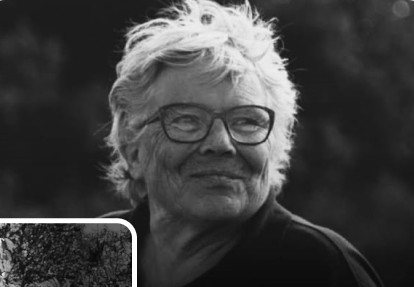
Mieke
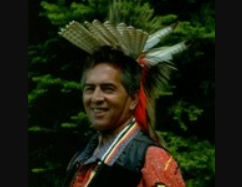
Terry Rogers
- A Letter from the Founders
To our visitors and friends,
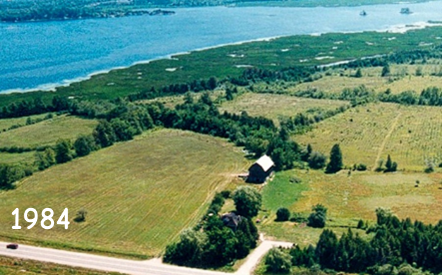
- When we first walked this land in 1984, many saw only an "abandoned farm"—a place where the soil had grown tired and the winds had taken more than they gave. But where others saw refuse, we saw a profound opportunity to listen, to plant, and to heal.
- Restoring this land has been a lesson in patience. We started by planting thousands of tiny spruce and pine seedlings into the sand and gravel, hoping they would take hold. Over the last forty-some years, we have watched with awe as nature responded. The "pioneer" trees we planted created the shelter needed for maples, ashes and oaks to return on their own. The birds followed, the wildlife moved back, and the air changed.
- Gamiing Nature Centre was born from the belief that humans should not just be observers of nature, but active partners in its recovery. By placing this land in trust with the Kawartha Heritage Conservancy (later named Kawartha Land Trust), we have ensured that this story doesn't end with us. This forest will remain a classroom, a sanctuary, and a reminder that even the most "exhausted" land can be brought back to life if treated with respect and intention.
- We invite you to walk these trails not just as a visitor, but as a guest of the Michi Saagiig Nishnaabeg territory. Take a deep breath, listen to the wind in the pines, and know that you are part of a story of renewal that will continue for generations to come.
Chi Miigwetch
The Gamiing Nature Centre Team
- History
The Story of the Land:
From Depletion to Discovery
1820–1850: The Era of Settlement & Struggle
In approximately 1825, John Collins became the first settler to farm this land. Like many early pioneers, he cleared the ancient forest to make way for agriculture. However, the land held its secrets closely; the thin layer of soil was quickly lost to wind erosion. What was intended to be a homestead soon became an "abandoned farm," left to the elements.
1984: A Vision for Restoration
After over a century of dormancy, the Schipper Family purchased the property. Recognizing that the land required healing rather than traditional farming, we began intensive research into reforestation, seeking ways to bring the forest back to life.
1986–1988: Planting the Future
The vision became a reality as the first physical work of reforestation began. Thousands of saplings were planted, beginning the long process of restoring the local ecosystem and stabilizing the soil.
1995–1999: Pioneering the Land Trust Movement
As the forest grew, so did the need to protect it forever. 1995: Research began into the legalities and benefits of Land Trusts. 1996–1999: Ian Attridge and Mieke Schipper collaborated to develop a regional land trust model. This foundational work led to the birth of the Kawartha Heritage Conservancy (KHC).
1998–2000: The Birth of Gamiing Nature Centre
While the land was being preserved, we saw a need to share its lessons with the community. 1998: Planning began for a nature and environmental education centre on-site. 2000: Gamiing Nature Centre was officially incorporated and received charitable status, dedicated to teaching the community about the "Honourable Harvest" and the natural world.
2001–2002: A Legacy Secured
The mission of conservation reached its peak when the Kawartha Heritage Conservancy was formally incorporated in 2001. In 2002, this land was officially put in Trust with the KHC (now known as the Kawartha Land Trust), ensuring that the vibrant ecosystem we've spent decades restoring will remain protected for generations to come.
2025: Heritage Designation
The property reached a significant historical milestone when it received its official Heritage Designation from the City of Kawartha Lakes. This designation recognizes the cultural and historical value of both the land and its original buildings, ensuring their architectural and environmental story is preserved.
- History
The Story of the Land:
From Depletion to Discovery
1820–1850: The Era of Settlement & Struggle
In approximately 1825, John Collins became the first settler to farm this land. Like many early pioneers, he cleared the ancient forest to make way for agriculture. However, the land held its secrets closely; the thin layer of soil was quickly lost to wind erosion. What was intended to be a homestead soon became an "abandoned farm," left to the elements.
1984: A Vision for Restoration
After over a century of dormancy, the Schipper Family purchased the property. Recognizing that the land required healing rather than traditional farming, we began intensive research into reforestation, seeking ways to bring the forest back to life.
1986–1988: Planting the Future
The vision became a reality as the first physical work of reforestation began. Thousands of saplings were planted, beginning the long process of restoring the local ecosystem and stabilizing the soil.
1995–1999: Pioneering the Land Trust Movement
As the forest grew, so did the need to protect it forever. 1995: Research began into the legalities and benefits of Land Trusts. 1996–1999: Ian Attridge and Mieke Schipper collaborated to develop a regional land trust model. This foundational work led to the birth of the Kawartha Heritage Conservancy (KHC).
1998–2000: The Birth of Gamiing Nature Centre
While the land was being preserved, we saw a need to share its lessons with the community. 1998: Planning began for a nature and environmental education centre on-site. 2000: Gamiing Nature Centre was officially incorporated and received charitable status, dedicated to teaching the community about the "Honourable Harvest" and the natural world.
2001–2002: A Legacy Secured
The mission of conservation reached its peak when the Kawartha Heritage Conservancy was formally incorporated in 2001. In 2002, this land was officially put in Trust with the KHC (now known as the Kawartha Land Trust), ensuring that the vibrant ecosystem we've spent decades restoring will remain protected for generations to come.
2025: Heritage Designation
The property reached a significant historical milestone when it received its official Heritage Designation from the City of Kawartha Lakes. This designation recognizes the cultural and historical value of both the land and its original buildings, ensuring their architectural and environmental story is preserved.
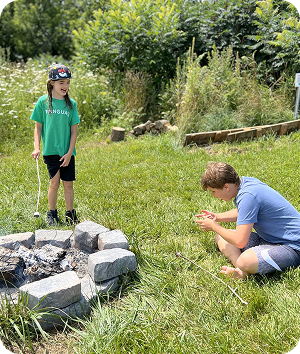
Nature is not a place to visit, it is home.
- Ask permission: Greet the plants/beings, introduce yourself, and ask if you can take from them.
- Abide by the answer:Listen for cues (or wait for the right time/conditions) and respect the response, whether it's a "yes" or "no".
- Never take the first, never take the last:Leave the first plant you see (it might be the only one) and the last (to ensure reproduction).
- Take only what you need:Don't be greedy; take just enough for your sustenance.
- Minimize harm:Harvest in a way that doesn't damage the plant or its environment.
- Use everything: Waste nothing from what you take.
- Give thanks and reciprocate:Show gratitude through actions like tending the land, planting, sharing, or offering songs and ceremonies.
- Beyond Foraging:
- These principles extend beyond gathering wild foods to all human-Earth interactions, influencing consumption, waste, energy use, and our overall relationship with nature, fostering a mindset of responsibility and care for the next seven generations.
- History
An Ecological Gift
National Significance
1.The land has been scientifically identified as “ecologically sensitive” and vital to Canada’s environmental heritage and bio-diversity
Permanent Protection
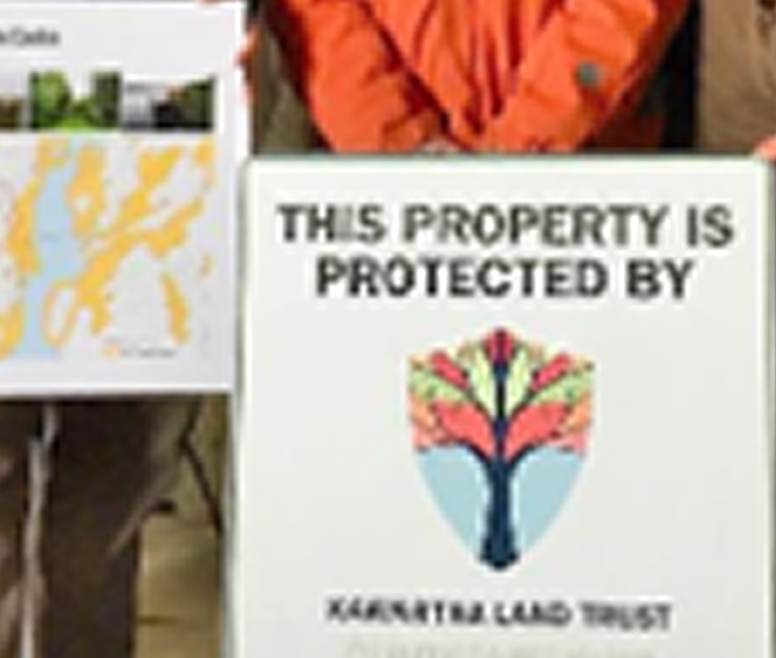
2.Thanks to the Schipper family and the Kawartha Land Trust, this status ensures that the 100 acres of shoreline, wetlands and forests can never be developed or subdivided.
Tax Advantages for Donors
Because the owner of the land is a recipient of an Eco Gift, certain donations of land or conservation easements provide benefits to the donor.
By protecting Gamiing through the Ecologiocal Gift Program, we have ensured that the shore, wetland and forest remain wild and accessible for generations to come
- History
An Ecological Gift
National Significance
1.The land has been scientifically identified as “ecologically sensitive” and vital to Canada’s environmental heritage and bio-diversity
Permanent Protection
2.Thanks to the Schipper family and the Kawartha Land Trust, this status ensures that the 100 acres of shoreline, wetlands and forests can never be developed or subdivided.
Tax Advantages for Donors
Because the owner of the land is a recipient of an Eco Gift, certain donations of land or conservation easements provide benefits to the donor.
By protecting Gamiing through the Ecologiocal Gift Program, we have ensured that the shore, wetland and forest remain wild and accessible for generations to come
Gamiing Resources
Links to External Websites
Canadian Bird Links www.bsc-eoc.org
Assoc of Field Ornithologists www.afonet.org/index.html
Birdwatching.com www.birdwatching.com
Birding.com www.birding.com
Cornell Lab of Ornithology birds.cornell.edu
Couchiching Conservancy www.couchconservancy.ca
Important Bird Areas www.ibacanada.com
Kawartha Field Naturalist Club http://www.kawarthafieldnaturalists.org/
National Audubon Society www.audubon.org
Nature Conservancy of Can www.natureconservancy.ca
Ontario Field Ornithologist www.ofo.ca
Orillia Naturalists Club http://www.couchconservancy.ca/oncwebsite/
Ornithology www.ornithology http://www.ornithology.com/ .com
South Peel Naturalists Club www.spnc.ca
Wild Birds.Com www.wildbirds.com
The Caronlinian Coalition www.carolinian.org
Evergreen www.evergreen.ca
Nature Canada www.naturecanada.ca
Sustainability Network www.sustainabilitynetwork.ca
Charity Village www.charityvillage.com
Trans Canada Trail https://thegreattrail.ca/
The Nature Conservancy www.nature.org
People and Planet www.peopleandplanet.net
Brooklyn Botanical Gardens www.bbg.org
Nestwatch watch.birds.cornell
Couchiching Conservancywww.couchconservancy.ca
Atlas of Breeding Birds in Ontario www.birdsontario.org
Kawartha Land Trust http://kawarthalandtrust.org/
Otonabee Conservation https://www.otonabeeconservation.com/
Parks Canada: Trent Severn Waterway National Historic Site
Pathway to Stewardship and Kinship: https://pathwayproject.ca/
Agricultural Events and Resources
Agriculture and Agri-Food Canada (AAFC) – .gc.ca/AAFC-AAC/display-afficher.do?id=1175526032952&lang=eng
Farmers’ Markets Canada – Market Finder http://www.farmersmarketscanada.ca/
Fleming College http://flemingcollege.ca/programs/sustainable-agriculture
Ontario Ministry of Agriculture, Food, and Rural Affairs (OMAFRA) website http://www.omafra http://www.omafra.gov.on.ca/ .gov.on.ca/
Ontario Federation of Agriculture – https://ofa.on.ca/
Trent University Sustainable Agriculture and Foods Systems Program
Natural Heritage Data
The Natural Heritage Information Centre (NHIC) compiles, maintains and distributes information on natural species, plant communities and spaces of conservation concern in Ontario.
Stewardship
Ontario Nature https://ontarionature.org/
OntarioAudubon